
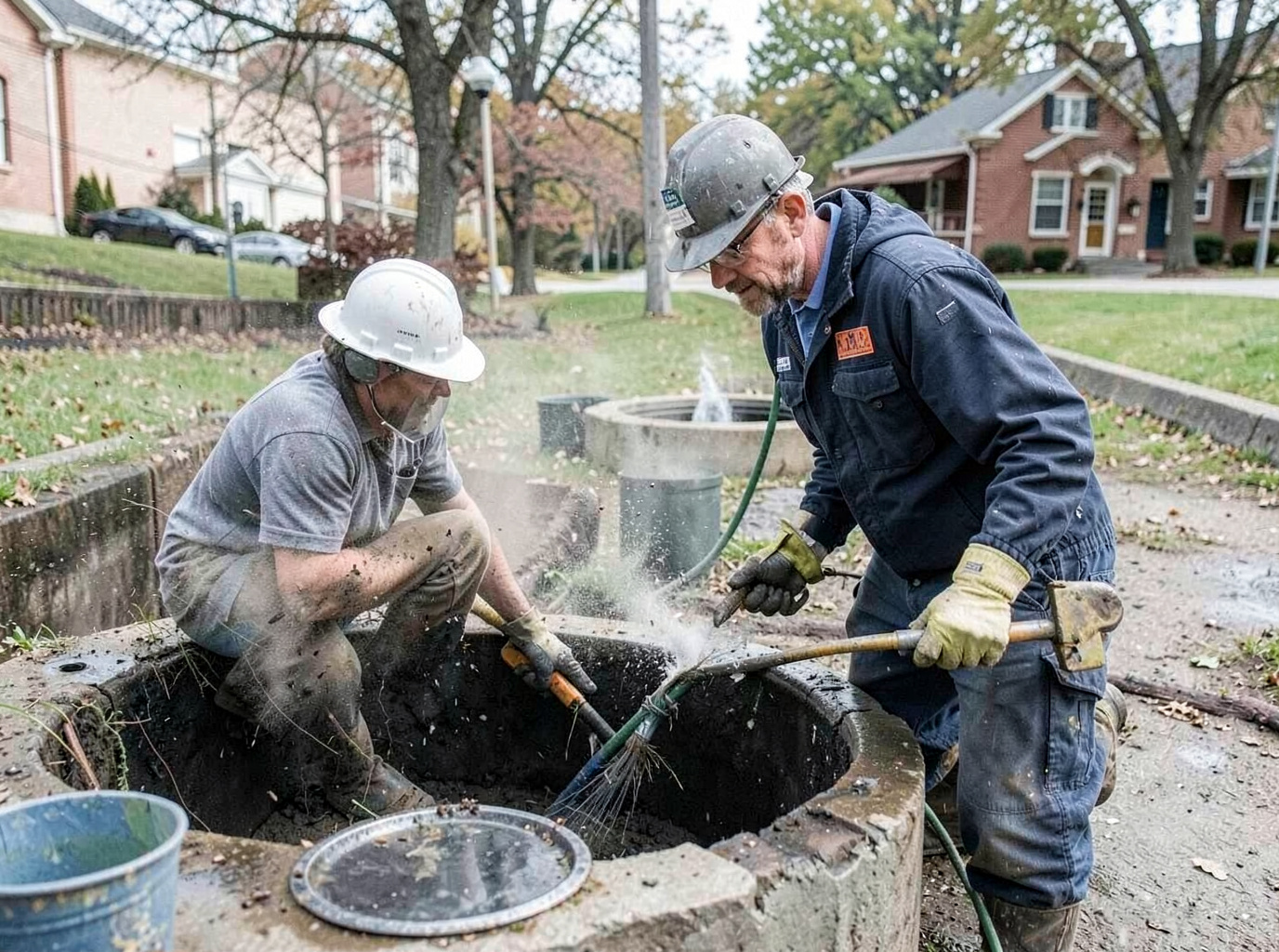
Greensboro storm drains handle runoff from hot, humid summers that drop heavy rain in short bursts and mild winters that still shed leaves and pine needles. In neighborhoods like Fisher Park and Lindley Park, older curb inlets and shallow laterals collect silt from the county's clay-heavy soils, turning small blockages into street flooding fast. Techs often find roots from mature street trees and sediment from nearby construction sites that the county's stormwater rules require property owners to keep clear.
Downtown Greensboro and Westerwood properties sit on tighter grids with combined storm and sanitary lines in some blocks, so a clogged storm drain can back up into basements during a sudden July thunderstorm. Crews use hydro-jetting and sectional cameras sized for 6- to 24-inch municipal lines rather than household drains. Working around the Greensboro Coliseum event traffic or near the Science Center means scheduling around peak hours and coordinating with city right-of-way permits when the line runs under the street.
Winston-Salem commuters and Sunset Hills residents see the same pattern after fall leaf drop: gutters feed directly into backyard storm inlets that were never designed for the volume of organic matter now common in Guilford County. Skipping annual cleaning lets grease from nearby restaurants and fine red clay combine into a cement-like plug that standard snakes cannot touch.
Common Storm Drain Issues in Greensboro
Heavy summer storms wash mulch, gravel and construction sediment into inlets faster than the mild winters can clear it. Clay soils around Lindley Park and Westerwood hold water longer, increasing root intrusion into older clay or concrete pipes. Downtown combined lines add the risk of sanitary backup if storm flow is blocked.
Technician insight
In Greensboro the thing that catches most people out with storm drain cleaning is how fast red clay and leaf mulch turn into a plug inside the shallow laterals that run from Sunset Hills backyards to the street. One good July storm and the inlet is full before homeowners notice; by then the water is already sheeting across the driveway instead of entering the pipe.
Westerwood curb inlet backup
After a heavy August rain, water pooled at the curb in front of a 1950s home in Westerwood instead of draining. Camera showed a root ball and clay plug 35 feet down the 8-inch line. We jetted from the inlet to the city main, flushed the basin, and confirmed full flow on the second pass.
Storm Drain Cleaning Services We Offer
✓Storm Drain Jetting
High-pressure water clears compacted silt, leaves and grease from curb inlets and laterals serving Fisher Park and Downtown Greensboro properties.
✓Storm Drain Camera Inspection
Locate roots, collapsed sections or illegal connections in lines under Westerwood streets before they cause flooding at the Greensboro Coliseum events.
✓Catch Basin Cleaning
Remove built-up sediment and debris from backyard and street catch basins common in Lindley Park and Sunset Hills after summer rains.
✓Storm Drain Root Removal
Cut and treat tree roots invading older storm lines near mature oaks in Fisher Park without damaging the pipe.
✓Emergency Storm Drain Clearing
Same-day response for flooded streets or driveways in Guilford County when a sudden downpour overwhelms blocked inlets.
Storm Drain Cleaning Cost in NC
| Service | Typical Range | What Affects It |
|---|---|---|
| Basic inlet and short lateral jetting | $175–$350 | Single curb inlet plus 20–40 ft of line; price rises with heavy sediment or root mass. |
| Full camera inspection | $125–$225 | Includes digital recording; required before jetting on older Westerwood or Fisher Park lines. |
| Catch basin cleaning | $200–$450 | Per basin; multiple basins on Lindley Park properties increase total. |
| Emergency after-hours clearing | $300–$600 | Evenings or weekends; common after summer thunderstorms near Downtown Greensboro. |
Ranges are typical for NC and confirmed with an exact written quote before any work starts.
How it works
- 1
Site Assessment
Walk the property and nearby inlets in the affected Greensboro neighborhood to identify visible debris and flow direction.
- 2
Camera Inspection
Run a waterproof camera through the storm line to map blockages, pipe condition and connection points.
- 3
Hydro Jetting
Apply controlled high-pressure water to break up silt, roots and grease while flushing material to the city main.
- 4
Final Flush and Check
Re-inspect with the camera, verify flow to the street or county system, and document before leaving the site.
Pricing
Most Greensboro storm drain jobs fall into predictable ranges based on line length, depth and debris type; we give a firm quote after the camera inspection.